“Before you can build ownership, you need to know where it’s missing.”
Imagine walking through your factory on a Monday morning.
The machines are running.
Production targets are on track.
Supervisors are giving instructions.
Reports are being submitted on time.
On the surface, everything looks efficient.
But then a machine stops unexpectedly.
Instead of someone stepping forward to solve the problem, everyone looks for instructions.
A customer complaint arrives.
Departments begin explaining why it wasn’t their responsibility.
An improvement idea comes from the shop floor.
It never reaches management.
Nothing appears broken.
Yet something important is missing.
That missing ingredient is ownership.
For many CEOs, this is one of the most frustrating realities of running a manufacturing business. Teams execute tasks, but they rarely think beyond them. People wait to be told instead of taking initiative. Managers report numbers instead of leading people.
The difference between an average factory and an exceptional one is rarely technology alone.
It is ownership.
As leadership expert John C. Maxwell writes in The 21 Irrefutable Laws of Leadership, everything rises and falls on leadership. When leaders create ownership instead of dependence, organizations become capable of sustained growth.
Peter Drucker captured this idea perfectly when he said,
“Management is doing things right; leadership is doing the right things.”
That distinction is exactly what separates factories that merely execute from those that continuously improve.
The question is simple.
How do you know where your factory stands today?
The answer begins with an Ownership Audit.
Why Every CEO Needs an Ownership Audit
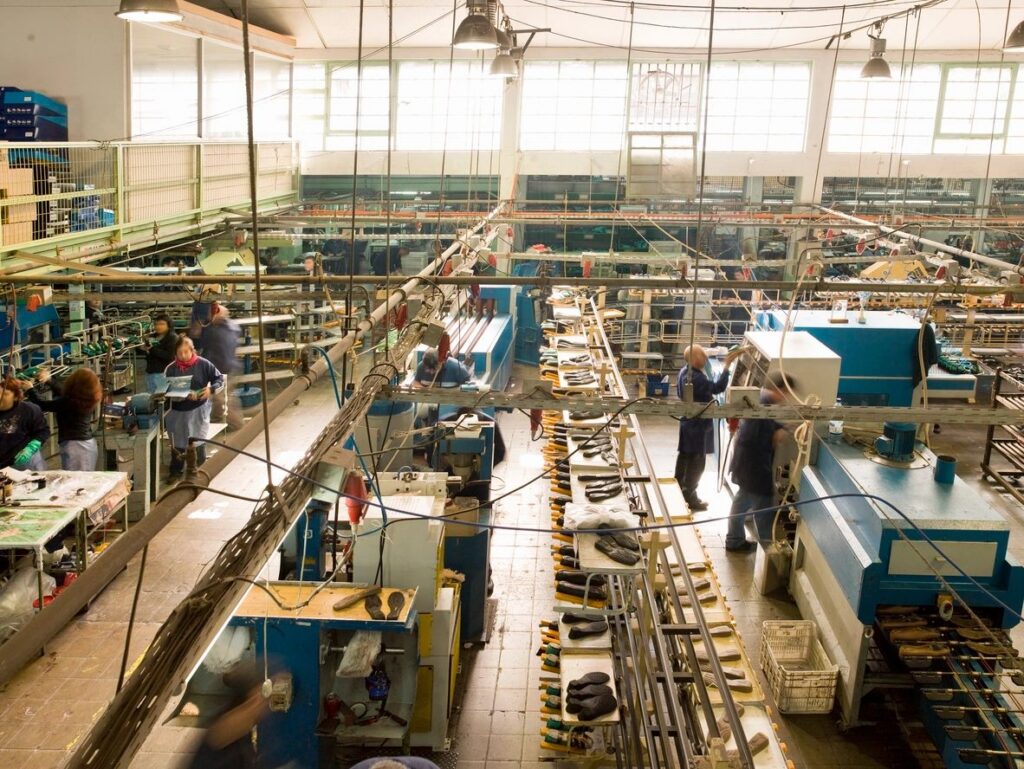
Most factories measure production efficiency, quality, downtime, delivery, safety, and financial performance.
Very few measure ownership.
Yet ownership influences every one of those metrics.
According to Gallup, organizations with highly engaged employees experience higher productivity, better profitability, lower absenteeism, and significantly reduced turnover compared to disengaged workplaces.
Engagement does not happen by accident.
Ownership drives engagement.
And leadership creates ownership.
That is why Divesh Soni developed the BUILD Framework, a practical roadmap that helps manufacturing organizations move from basic execution to becoming dependable partners through leadership, culture, and mindset transformation.
An Ownership Audit allows CEOs to understand not only where operational maturity exists but also where leadership maturity needs attention.
Ownership Is Built in Stages, Not Overnight
Many organizations believe ownership can be improved by introducing a new KPI, changing incentives, or conducting another training program.
In reality, ownership is a gradual evolution.
The BUILD Framework identifies five stages of this journey.
B: Basic
“We produce what is asked.”
At this stage, people focus only on completing assigned work.
Common signs include:
- Employees avoid decision-making.
- Managers spend most of their time giving instructions.
- Mistakes create fear.
- People say, “That is not my job.”
Ask yourself:
- Do people wait for approval before solving simple problems?
- Are mistakes hidden rather than discussed?
If the answer is yes, your factory is operating from compliance rather than ownership.
U: Upgrading
“We are improving and tracking.”
Factories begin measuring performance.
Dashboards improve.
Reports become detailed.
However, reporting often replaces leadership.
Typical signs include:
- Too much reporting and too little action.
- Managers spend more time explaining numbers than improving them.
- Improvement happens only when senior management pushes it.
Ask yourself:
- Are meetings focused more on reporting than problem-solving?
- Does data lead to action?
I: Industrialised
“We are stable and consistent.”
Processes become standardized.
Quality improves.
Systems mature.
Yet a new challenge appears.
People begin trusting processes more than people.
Innovation slows.
Employees become comfortable with “good enough.”
Questions for CEOs:
- Are employees encouraged to challenge existing processes?
- Do improvement ideas come regularly from the shop floor?
Consistency is valuable.
Complacency is expensive.
L: Leading
“We are preferred.”
At this stage, leadership becomes the competitive advantage.
Departments collaborate.
Managers coach instead of controlling.
Teams solve problems together.
Characteristics include:
- Strong leadership across levels.
- Psychological safety.
- Cross-functional collaboration.
- Employees willingly take responsibility.
Ownership becomes visible because people care about outcomes, not just tasks.
D: Dependable Partner
“We grow together.”
This is where factories become trusted by customers, suppliers, employees, and communities.
Leadership extends beyond factory walls.
People understand how their work contributes to a larger purpose.
Innovation becomes continuous.
Trust becomes the operating system.
Factories at this stage create both business value and societal value, aligning naturally with sustainable leadership principles and long-term competitiveness.
Your 30-Minute Factory Ownership Audit
You do not need expensive software to begin.
You need honest conversations.
Set aside 30 minutes with your leadership team.
Discuss the following questions.
Leadership
- Do supervisors solve problems or simply escalate them?
- Are managers coaching or controlling?
- How often do leaders ask questions instead of giving answers?
Culture
- Do employees feel safe speaking up?
- Is learning encouraged after mistakes?
- Is accountability shared or avoided?
Communication
- Do departments collaborate naturally?
- Are problems discussed openly?
- Does information flow freely across functions?
Growth
- Are employees continuously learning?
- Do people understand career progression?
- Are future leaders being developed today?
Purpose
- Can employees explain how their work impacts customers?
- Do teams understand why improvement matters?
- Is there a sense of contribution beyond production targets?
Score every question from 1 to 5.
Patterns will emerge quickly.
The goal is not perfection.
The goal is awareness.
Because awareness creates action.
Where the ECG Model Strengthens Ownership
Ownership does not grow simply because leaders demand it.
It grows because leaders create the right conditions.
This is where Divesh Soni’s ECG Framework becomes powerful.
Experience
Ownership begins with the experience people have every day.
When leaders create psychological safety, authentic influence, inclusion, emotional connection, and self-awareness through the SPACE model, employees become more willing to take initiative.
People rarely own environments they fear.
They own environments they trust.
Contribution
People contribute more when they believe their work matters.
The SERVE model focuses on strategic alignment, empowerment, resilience, visibility, and continuous learning.
Ownership grows when people feel empowered instead of controlled.
Growth
The THRIVE model ensures that ownership produces measurable business outcomes.
Leadership drives:
- Better collaboration
- Stronger execution
- Innovation
- Sustainable growth
- ESG alignment
- Long-term value creation
Ownership is not the final destination.
Growth is.
The Psychology Behind Ownership

Behavioral science consistently shows that autonomy is one of the strongest drivers of intrinsic motivation.
People become committed when they believe they have influence over outcomes.
That is why factories relying only on rules and supervision often struggle to build initiative.
Ownership is fundamentally psychological before it becomes operational.
It starts with trust.
Then responsibility.
Then accountability.
Finally, pride.
Factories that understand this sequence outperform those that rely solely on compliance.
The Biggest Mistake CEOs Make
Many CEOs assume ownership is an employee problem.
It is usually a leadership system problem.
People rarely wake up deciding not to care.
They respond to the environment leaders create.
If managers solve every problem, employees stop thinking.
If mistakes are punished, innovation disappears.
If communication flows only from the top down, ownership never moves upward.
Culture always reflects leadership.
Your Next Leadership Conversation
Before launching another improvement initiative, ask one question.
What stage of BUILD are we truly operating in today?
The answer may reveal why some projects succeed while others quietly fade away.
The strongest factories are not built only with better technology.
They are built with better thinking.
They move beyond execution.
They develop ownership.
They create leaders at every level.
The Next Step
This Ownership Audit is only the beginning.
The complete assessment framework, practical scoring system, leadership diagnostics, and implementation roadmap will be explored in Divesh Soni’s upcoming Manufacturing Ownership Leadership White Paper.
If you are a CEO, Plant Head, or manufacturing leader looking to transform your organization’s leadership culture, this white paper will provide actionable insights to help you identify hidden barriers and build a factory where ownership becomes everyone’s responsibility.
Because transformation does not begin with a new machine.
It begins with a new mindset.
Frequently Asked Questions
1. What is a Factory Ownership Audit?
A Factory Ownership Audit is a leadership assessment that helps CEOs evaluate how much ownership exists across managers, supervisors, and teams. It identifies cultural, behavioral, and leadership gaps that impact business performance.
2. What is the BUILD Framework?
The BUILD Framework is a manufacturing leadership maturity model developed by Divesh Soni. It guides organizations through five stages: Basic, Upgrading, Industrialised, Leading, and Dependable Partner, helping factories move from execution to ownership.
3. How long does a leadership ownership assessment take?
A high-level ownership audit can be completed in approximately 30 minutes using structured leadership and culture questions. A comprehensive assessment may involve interviews, observations, and organizational diagnostics.
4. Why is ownership important in manufacturing?
Ownership improves accountability, problem-solving, innovation, employee engagement, quality, and operational performance. It also strengthens leadership succession and organizational resilience.
5. How does the ECG Framework support ownership?
The ECG Framework develops ownership by improving employee Experience through SPACE, strengthening Contribution through SERVE, and driving sustainable Growth through THRIVE. Together, these create the conditions for high-performing, purpose-driven manufacturing organizations.
6. Who should conduct a Factory Ownership Audit?
The audit is most valuable for CEOs, Factory Owners, Plant Heads, Operations Directors, HR Leaders, and senior leadership teams committed to improving culture, leadership effectiveness, and long-term business performance.