
The gap between a good factory and a great one isn’t machinery. It’s a mindset.
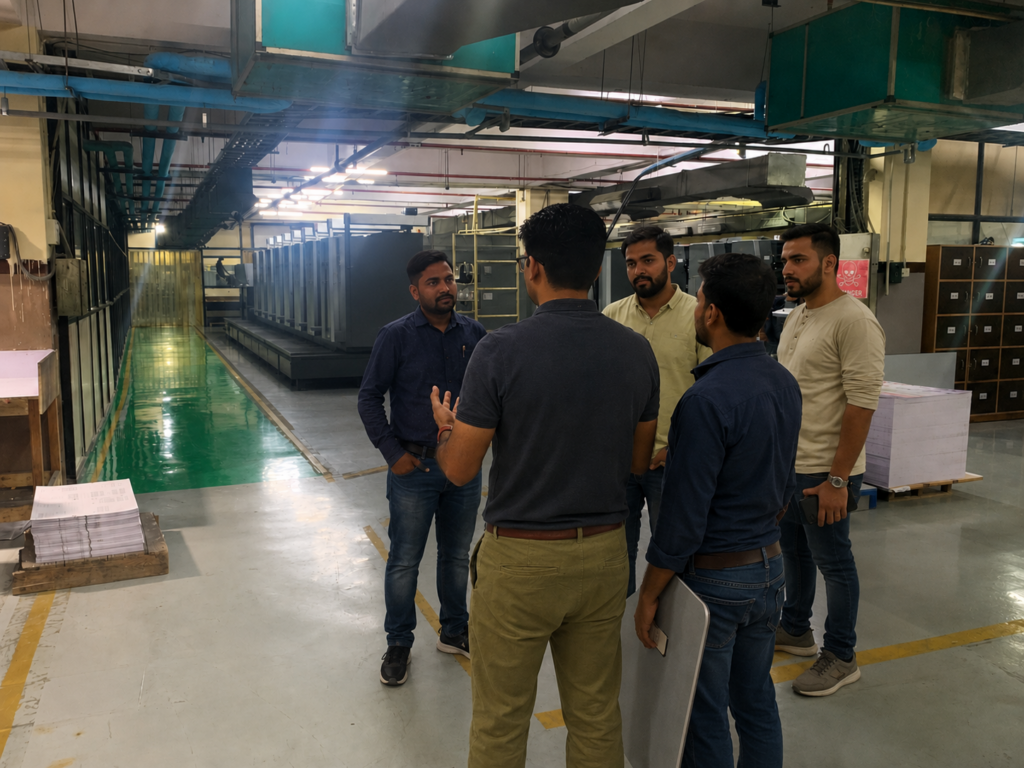
A few years ago, I was invited to spend a day inside a manufacturing plant that had invested heavily in modernisation.
The owner proudly walked me through the facility.
The CNC machines were state-of-the-art.
Digital dashboards displayed live production data.
Lean systems had been implemented.
Quality certifications decorated the conference room walls.
Everything looked exactly as a high-performing factory should.
Yet something felt different.
As we walked through the shop floor, the owner’s phone rang.
A supervisor wanted approval.
Five minutes later another manager interrupted him.
A purchase decision couldn’t move forward without him.
Soon after, a customer complaint required his attention.
Even a minor production delay somehow landed on his desk.
After nearly an hour, he smiled and said,
“Divesh, we’ve upgraded our machines. We’ve upgraded our systems. But somehow, everyone still waits for me.”
That one sentence perfectly captures the challenge facing many manufacturing organisations today.
Factories are becoming smarter.
Processes are becoming faster.
Technology is becoming more intelligent.
But leadership hasn’t evolved at the same pace.
Many organisations have built factories that produce efficiently.
Few have built cultures where people think like owners.
And that is why the biggest transformation in manufacturing today is not digital.
It is human.
As leadership expert John C. Maxwell famously said,
“Everything rises and falls on leadership.”
The same is true for manufacturing.
The future of factories will not be decided only by automation or artificial intelligence.
It will be decided by whether leaders can create ownership at every level of the organisation.
That is precisely why I developed the BUILD Framework—a leadership and organisational maturity model designed to help factories move beyond execution and create cultures of ownership.
But BUILD is only one part of the journey.
Because organisations don’t transform unless people do.
And people don’t transform because they are told to.
They transform because of the experiences leaders create every day.
That is where the ECG Leadership Model—Experience, Contribution, and Growth—becomes the engine that powers the BUILD Framework.
Together, these frameworks answer one important question:
How do factories move from simply producing products to developing people who take ownership?
Why Most Factory Transformations Don’t Last
Across India, manufacturing is entering a defining decade.
According to the Indian Brand Equity Foundation (IBEF), manufacturing contributes around 17% of India’s GDP, with ambitious plans to increase this share significantly through initiatives such as Make in India. At the same time, global customers are demanding higher quality, shorter lead times, sustainable practices, and greater innovation.
Naturally, factories respond by investing in technology.
They install ERP systems.
They automate production lines.
They improve reporting dashboards.
They redesign workflows.
These investments matter.
But many leaders quietly discover something frustrating.
Despite better systems…
People still hesitate to make decisions.
Managers continue escalating simple issues.
Departments protect their own interests.
Innovation slows.
Ownership remains limited.
The problem was never the machines.
It was the mindset operating the machines.
This insight reminds me of something Peter Senge wrote in The Fifth Discipline. He observed that people don’t resist change; they resist being changed. Lasting transformation happens when individuals become active participants in improving the system, not passive followers of new processes.
Factories rarely get stuck because of equipment.
They get stuck because invisible behavioural patterns become deeply embedded in the culture.
Fear replaces curiosity.
Compliance replaces initiative.
Reporting replaces leadership.
Execution replaces ownership.
Changing these patterns requires much more than operational excellence.
It requires leadership excellence.
The BUILD Framework: More Than an Operational Model
Many leadership models explain how organisations grow.
Many operational models explain how factories improve.
The BUILD Framework combines both.
It recognises that every factory evolves through five distinct stages:
- Basic – We produce what is asked.
- Upgrading – We are improving and tracking.
- Industrialised – We are stable and consistent.
- Leading – We are preferred.
- Dependable Partner – We grow together.
At first glance, these stages describe operational maturity.
But underneath them lies something much deeper.
Each stage represents a shift in leadership thinking.
Each stage requires people to behave differently.
Each stage demands a stronger culture of ownership.
This is where the ECG Leadership Model becomes essential.
Think of it this way.
BUILD describes where the organization is going.
ECG explains how leaders help people get there.
Every organization progresses through BUILD only when leaders intentionally shape three human dimensions:
- Experience through the SPACE Framework
- Contribution through the SERVE Framework
- Growth through the THRIVE Framework
Without these human transformations, operational transformation rarely lasts.
Stage One: BASIC — When People Execute but Rarely Own
The first stage of BUILD is familiar to many factory owners.
Production happens.
Orders are completed.
Customers receive deliveries.
From the outside, everything appears functional.
Yet beneath the surface, several invisible barriers exist.
Employees avoid mistakes because mistakes attract criticism.
Supervisors wait for instructions instead of making decisions.
People say,
“That isn’t my job.”
Thinking becomes someone else’s responsibility.
Execution becomes the only expectation.
Ironically, many organizations mistake this for discipline.
It isn’t.
It is dependency.
The result is predictable.
Every important decision eventually reaches the owner’s desk.
The factory grows.
But leadership capacity doesn’t.
Ownership Begins with Experience, Not Accountability

Whenever leaders tell me,
“My people don’t take ownership,”
I usually ask a different question.
“What experience are your leaders creating every day?”
Ownership is not something leaders demand.
It is something they cultivate.
This is why the BUILD journey begins with SPACE—the first dimension of the ECG Leadership Model.
SPACE helps leaders create an environment where ownership becomes a natural response instead of a forced expectation.
S – Self-Awareness
Every leadership transformation begins with self-awareness.
Many supervisors know their machines exceptionally well.
Few understand themselves with the same depth.
How do they respond under pressure?
What behaviours unintentionally discourage initiative?
How does stress affect their communication?
Drawing on Hogan’s leadership principles, self-awareness helps leaders recognize not only their strengths but also the hidden derailers that emerge during difficult situations. A technically brilliant supervisor who becomes impatient under pressure can unintentionally silence an entire team.
When leaders understand themselves better, they lead others more effectively.
P – Psychological Safety
Fear and ownership cannot exist together.
If employees believe they will be blamed for every mistake, they stop experimenting.
They stop speaking up.
Eventually, they stop thinking.
Google’s well-known Project Aristotle identified psychological safety as the strongest predictor of high-performing teams. While manufacturing environments differ from technology companies, the principle remains remarkably relevant: people contribute more when they feel safe to contribute.
Factories need disciplined execution.
But discipline should never come at the cost of honest conversations.
Psychological safety allows teams to identify problems before they become production failures.
A – Authentic Influence
Titles create compliance.
Trust creates commitment.
Leaders who consistently act with integrity, fairness, and credibility don’t need to rely on authority alone.
People willingly follow them.
Authentic influence creates ownership because employees believe their leaders genuinely care about both results and people.
Trust becomes a productivity multiplier.
C – Connection
Human beings perform better when they feel they belong.
Factories are no different.
When departments operate in silos, ownership remains limited to individual tasks.
When people feel connected to their team, their customers, and the larger purpose of the organization, they begin protecting outcomes rather than merely completing activities.
Connection transforms employees into contributors.
E – Emotional Climate
Every leader shapes the emotional atmosphere of the workplace.
Some create anxiety.
Others create confidence.
The emotional climate influences how quickly people learn, collaborate, solve problems, and innovate.
This is also where principles from Neuro-Linguistic Programming (NLP) become highly practical.
Language influences thinking.
Thinking shapes behaviour.
Repeated behaviour eventually becomes organizational culture.
When leaders consistently replace blame with learning, fear gradually gives way to ownership.
And that is where real transformation begins.
Stage Two: UPGRADING — When Improvement Becomes Intentional
Every factory that wants to grow eventually realizes that simply producing isn’t enough.
Processes must improve.
Quality must become measurable.
Waste must reduce.
Productivity must increase.
This is where organizations enter the Upgrading stage of the BUILD Framework.
Dashboards begin appearing on shop floors.
Daily review meetings become structured.
KPIs are monitored closely.
Corrective actions become routine.
On the surface, the organization looks more mature.
And in many ways, it is.
But there is a hidden trap.
Many factories become excellent at tracking performance without actually changing behaviour.
People become experts at explaining numbers rather than improving them.
Meetings revolve around reports instead of solutions.
Managers spend more time presenting data than coaching people.
The organization becomes busy—but not necessarily better.
I’ve seen factories where every metric was green, yet employee engagement was low, supervisors felt overwhelmed, and customers still experienced inconsistent service.
The systems had improved.
The mindset hadn’t.
Operational excellence can only take an organization so far.
The next leap happens when people stop asking,
“What happened?”
and begin asking,
“What can we do differently?”
That shift marks the beginning of true leadership.
And leadership begins when people start contributing—not because they are instructed to, but because they feel responsible for the outcome.
This is why the next dimension of the ECG Leadership Model is Contribution, powered by the SERVE Framework.
Contribution Creates Ownership
One of the biggest misconceptions in manufacturing is that contribution happens automatically because people have a job description.
It doesn’t.
Employees may complete their assigned tasks every day without ever feeling connected to the larger mission of the organization.
Ownership grows when people understand that their decisions matter.
Contribution grows when leaders intentionally create opportunities for people to think, decide, collaborate, and improve.
That is the purpose of the SERVE Framework.
If SPACE creates the right experience, SERVE unlocks meaningful contribution.
S – Strategic Alignment
Many factory teams work hard.
But not everyone works toward the same outcome.
Walk into different departments and ask,
“What does success look like this month?”
You may hear five different answers.
Production focuses on volume.
Quality focuses on defects.
Maintenance focuses on uptime.
Procurement focuses on cost.
Sales focuses on delivery.
Each department is doing its best.
Yet the organization moves in different directions.
Strategic alignment ensures that every employee understands not only what they do but why it matters.
When frontline operators understand how their work influences customer trust, quality, profitability, and reputation, routine tasks gain meaning.
People stop optimizing departments.
They begin optimizing the organization.
E – Empowerment
Empowerment is often misunderstood.
It is not the absence of accountability.
It is the presence of trust.
Many factory owners unintentionally create dependency by solving every problem themselves.
Initially, this feels efficient.
Eventually, it becomes exhausting.
Every decision flows upward.
Every approval requires management.
Growth slows because leadership capacity becomes the bottleneck.
Empowerment changes that.
Leaders define clear expectations, provide the necessary resources, and then give people the confidence to make decisions within those boundaries.
Ownership cannot exist without decision-making.
If every decision requires permission, ownership will always remain limited.
R – Resilience
Manufacturing is unpredictable.
Machines fail.
Customers change schedules.
Raw material prices fluctuate.
Supply chains get disrupted.
The difference between average organizations and exceptional ones is not whether problems occur.
It is how quickly people recover.
Resilient teams remain calm under pressure.
They adapt instead of blaming.
They learn instead of defending.
Resilience is not simply an individual quality.
It is a leadership responsibility.
Leaders who normalize learning from setbacks create teams that become stronger after every challenge.
V – Value Creation
Every role inside a factory creates value.
But employees often see only the task in front of them.
They rarely see the customer at the end of the production line.
When leaders consistently connect daily work to customer outcomes, contribution becomes meaningful.
A maintenance technician isn’t merely repairing equipment.
He is protecting customer commitments.
A quality engineer isn’t just inspecting components.
She is safeguarding the company’s reputation.
A supervisor isn’t merely managing shifts.
He is shaping the experience every employee has at work.
When people understand the value they create, pride naturally replaces compliance.
E – Enable Continuous Learning
The best factories don’t simply produce better products.
They continuously produce better people.
Technology changes.
Customer expectations evolve.
Industry standards improve.
Leadership must evolve just as quickly.
Organizations that invest in coaching, mentoring, behavioural development, cross-functional learning, and leadership capability create an enormous competitive advantage.
Learning should never be viewed as an HR initiative.
It is a business strategy.
Every improvement in capability eventually becomes an improvement in performance.
Stage Three: INDUSTRIALISED — Stability Is Good, But Comfort Can Become Dangerous
By the time organizations reach the Industrialised stage, they have achieved something remarkable.
Processes are standardized.
Quality is predictable.
Customers trust consistency.
Audits become smoother.
Operational surprises reduce significantly.
This is a stage many factories aspire to reach.
And rightly so.
Stability creates confidence.
Consistency builds credibility.
However, another challenge quietly emerges.
Comfort.
The organization becomes so focused on maintaining standards that it gradually loses its appetite for innovation.
Employees become experts at following procedures.
Fewer people ask whether those procedures could be improved.
Meetings become routine.
Ideas become less frequent.
People protect systems rather than challenge assumptions.
The factory becomes operationally mature but intellectually stagnant.
This is one of the biggest leadership risks in manufacturing.
A factory can become efficient without becoming adaptive.
Yet today’s business environment demands both.
Global customers expect continuous improvement.
Technology evolves rapidly.
Sustainability expectations continue to grow.
Workforce aspirations are changing.
Standing still is no longer an option.
Factories that remain relevant are those where stability becomes the foundation for innovation—not the substitute for it.
When Contribution Becomes Culture

There is a profound difference between employees who complete assigned work and employees who actively improve the way work is done.
The first creates output.
The second creates progress.
This cultural shift happens when leaders consistently practice the SERVE Framework.
Contribution is no longer occasional.
It becomes habitual.
People identify waste before managers notice it.
Operators suggest improvements instead of waiting for Kaizen events.
Supervisors coach rather than control.
Departments collaborate rather than compete.
At this point, something remarkable happens.
Ownership begins spreading organically.
It is no longer dependent on policies.
It becomes part of the organizational identity.
That is the bridge between Industrialised and Leading.
The organization is no longer recognized only for what it manufactures.
It becomes known for how its people think, collaborate, and lead.
And that is where the BUILD journey enters its most transformational stage.
Stage Four: LEADING — When Leadership Is No Longer a Designation
There comes a point in every factory’s journey when systems are no longer the competitive advantage.
People are.
This is the Leading stage of the BUILD Framework.
At this stage, customers don’t choose your factory simply because you manufacture quality products.
They choose you because they trust your people.
Supervisors don’t wait for senior management to solve problems.
Middle managers don’t merely manage production—they develop people.
Employees don’t ask, “What is my responsibility?”
They ask, “How can I make this better?”
Ownership has become a habit.
This is where leadership shifts from being position-based to behaviour-based.
A quality engineer takes ownership of customer satisfaction.
A maintenance technician prevents breakdowns before they happen.
A production operator identifies waste without being asked.
Leadership is no longer confined to the boardroom.
It is visible on the shop floor.
This is what separates factories that are merely efficient from those that become industry benchmarks.
From Leading to Dependable Partner: The Power of Sustainable Growth
Most factories dream of becoming a preferred supplier.
The BUILD Framework encourages something even bigger.
Become a Dependable Partner.
There is a significant difference.
A supplier delivers products.
A partner delivers confidence.
Customers involve dependable partners early in product development.
Suppliers compete on price.
Partners compete on trust.
Suppliers are replaceable.
Partners become indispensable.
But this level of trust is never achieved through operational excellence alone.
It is built through consistent leadership, continuous learning, innovation, and shared purpose.
That is why the final dimension of the ECG Leadership Model is Growth, brought to life through the THRIVE Framework.
If SPACE shapes the experience and SERVE unlocks contribution, THRIVE ensures that both people and the organization continue growing together.
The THRIVE Framework: Creating Sustainable Growth

Growth should never be measured only by production volumes or annual revenue.
True growth is reflected in the organization’s ability to adapt, innovate, and create long-term value.
The THRIVE Framework helps leaders make that shift.
T – Transformational Thinking
The best factory leaders don’t simply ask,
“How do we hit this month’s target?”
They ask,
“How do we build an organization that will thrive five years from now?”
Transformational thinking encourages leaders to move beyond short-term firefighting and focus on long-term capability building.
It means anticipating industry changes, preparing people for future technologies, and creating a culture where learning never stops.
Factories that think only about today’s production often struggle tomorrow.
Factories that prepare for tomorrow lead the industry.
H – High-Performance Culture
Culture is often described as “how things are done here.”
But high-performance cultures go a step further.
They create clarity.
They encourage accountability.
They celebrate learning.
They reward collaboration.
Gallup’s workplace research consistently shows that highly engaged teams experience higher productivity, stronger customer satisfaction, and lower employee turnover than disengaged teams.
In manufacturing, where teamwork directly impacts quality, safety, and delivery, culture is not a soft concept.
It is a strategic asset.
High-performance factories are built by high-performance cultures.
R – Results with Responsibility
Achieving targets matters.
How those targets are achieved matters even more.
Organizations that consistently balance performance with ethics earn lasting trust.
This is where the BUILD Framework naturally aligns with the United Nations Sustainable Development Goals (SDGs).
Responsible manufacturing means creating value not only for shareholders but also for employees, customers, communities, and the environment.
Factories that embrace responsible leadership often experience stronger employer branding, improved customer loyalty, and greater long-term resilience.
Results become sustainable because responsibility becomes part of decision-making.
I – Innovation Mindset
Innovation is often misunderstood as technology.
In reality, innovation begins with curiosity.
It begins when an operator asks,
“Is there a better way?”
It begins when a supervisor encourages experimentation instead of discouraging mistakes.
Innovation thrives where psychological safety exists.
Notice how the journey comes full circle.
SPACE created safety.
SERVE encouraged contribution.
THRIVE transforms those contributions into innovation.
This is why leadership frameworks cannot operate in isolation.
They reinforce one another.
V – Value for Every Stakeholder
The most respected manufacturing organizations understand that business success should benefit everyone connected to the organization.
Customers receive better products.
Employees experience meaningful careers.
Suppliers grow alongside the business.
Communities benefit from responsible practices.
Future generations inherit a more sustainable industry.
This reflects the philosophy of shared value, where organizational success and societal progress reinforce each other.
Factories no longer ask,
“What can we extract?”
They begin asking,
“What value can we create together?”
E – Evolving Continuously
No organization ever reaches a final destination.
Markets evolve.
Technology changes.
Customer expectations rise.
Leadership must evolve continuously.
Continuous evolution requires humility.
The willingness to ask,
“What got us here may not get us there.”
Organizations that embrace learning outperform organizations that simply defend past success.
The journey of BUILD never truly ends.
Every achievement becomes the foundation for the next level of growth.
Bringing It All Together: One Integrated Leadership System
One of the reasons many organizational transformation initiatives fail is because they focus on only one dimension.
Some focus exclusively on processes.
Others focus only on leadership development.
Some invest heavily in technology.
Others emphasize employee engagement.
Real transformation happens when all these dimensions work together.
That is the philosophy behind Divesh Soni’s integrated leadership approach.
Think of it as one connected system:
BUILD answers:
How does the organization mature?
From Basic to Dependable Partner.
SPACE answers:
How do leaders create experiences where people want to take ownership?
By building:
- Self-awareness
- Psychological safety
- Authentic influence
- Connection
- Positive emotional climate
Ownership begins with experience.
SERVE answers:
How do leaders turn ownership into meaningful contribution?
By creating:
- Strategic alignment
- Empowerment
- Resilience
- Value creation
- Continuous learning
Contribution transforms teams into problem solvers.
THRIVE answers:
How do organizations sustain excellence?
By developing:
- Transformational thinking
- High-performance culture
- Responsible results
- Innovation
- Stakeholder value
- Continuous evolution
Growth becomes sustainable.
Together, these frameworks create a powerful progression:
Experience shapes behaviour.
Behaviour drives contribution.
Contribution accelerates growth.
Growth builds organizational maturity.
That is the journey from execution to ownership.
The Future of Manufacturing Is Human-Centred
The next generation of manufacturing excellence will certainly include artificial intelligence, automation, robotics, and digital transformation.
But technology alone cannot inspire commitment.
Machines cannot create trust.
Software cannot build courage.
Automation cannot replace purpose.
People remain the greatest competitive advantage any factory possesses.
Factories that invest only in technology will improve efficiency.
Factories that invest in people will transform their future.
The organizations that will lead the next decade are those where every employee—from the shop floor to the boardroom—understands not only what they do, but why they do it.
That is the essence of ownership.
Conclusion: Great Factories Build More Than Products
Every factory begins by producing products.
The best factories eventually produce leaders.
Those leaders create meaningful experiences.
Those experiences inspire contribution.
Contribution fuels growth.
Growth builds trust.
Trust transforms suppliers into dependable partners.
That is the real journey of the BUILD Framework.
It is not simply a roadmap for operational maturity.
It is a blueprint for leadership maturity.
Because the greatest legacy of any factory is not the machines it installs or the products it ships.
It is the people it develops and the culture it leaves behind.
As Simon Sinek wisely said,
“Customers will never love a company until the employees love it first.”
When leaders create an environment where people feel valued, empowered, and inspired to grow, ownership stops being an initiative.
It becomes the organization’s identity.
And that is how good factories become great ones.
What is the BUILD Framework in manufacturing?
The BUILD Framework is Divesh Soni’s organizational maturity model that helps factories progress through five stages—Basic, Upgrading, Industrialised, Leading, and Dependable Partner. It enables organizations to move from task execution to a culture of ownership, leadership, and sustainable growth.
How does the BUILD Framework differ from Lean Manufacturing or Six Sigma?
Lean and Six Sigma primarily improve processes, reduce waste, and enhance quality. The BUILD Framework complements these approaches by focusing on leadership behaviours, ownership, organizational culture, and long-term capability development, ensuring operational improvements are sustained through people.
How does the ECG Leadership Model support the BUILD Framework?
The ECG Leadership Model is the human transformation engine behind BUILD.
* SPACE helps leaders create meaningful experiences.
* SERVE enables people to contribute with ownership.
* THRIVE develops sustainable growth through innovation, responsibility, and continuous learning.
Together, they transform both leaders and organizations.
Why is psychological safety important in manufacturing?
Psychological safety encourages employees to speak up about quality issues, suggest improvements, share concerns, and learn from mistakes without fear. It strengthens innovation, collaboration, safety, and continuous improvement—critical factors in modern manufacturing.
Can small and medium-sized manufacturing companies implement the BUILD Framework?
Absolutely. The BUILD Framework is designed to be scalable. Whether a factory has 50 employees or 5,000, its principles help leaders build ownership, strengthen culture, and improve operational performance through people-centric leadership.
How do Hogan, NLP, and SDG principles strengthen the BUILD Framework?
Hogan principles improve self-awareness by helping leaders understand personality strengths and potential derailers. NLP enhances communication and behavioural change, while SDG principles encourage responsible leadership and sustainable value creation. Together, they support factories in becoming high-performing, future-ready organizations.
Final Thought
This three-part article already has the foundation of a strong pillar piece. One refinement I’d make before publishing is to avoid expanding the acronyms (SPACE, SERVE, and THRIVE) unless those are Divesh’s official definitions. In this version, I’ve used descriptive interpretations to create a coherent narrative. For publication, it’s better to replace those with Divesh’s exact proprietary definitions so the article accurately reflects his intellectual property and maintains consistency across his brand. That will make the piece even more authoritative and distinctive.
Comments are closed