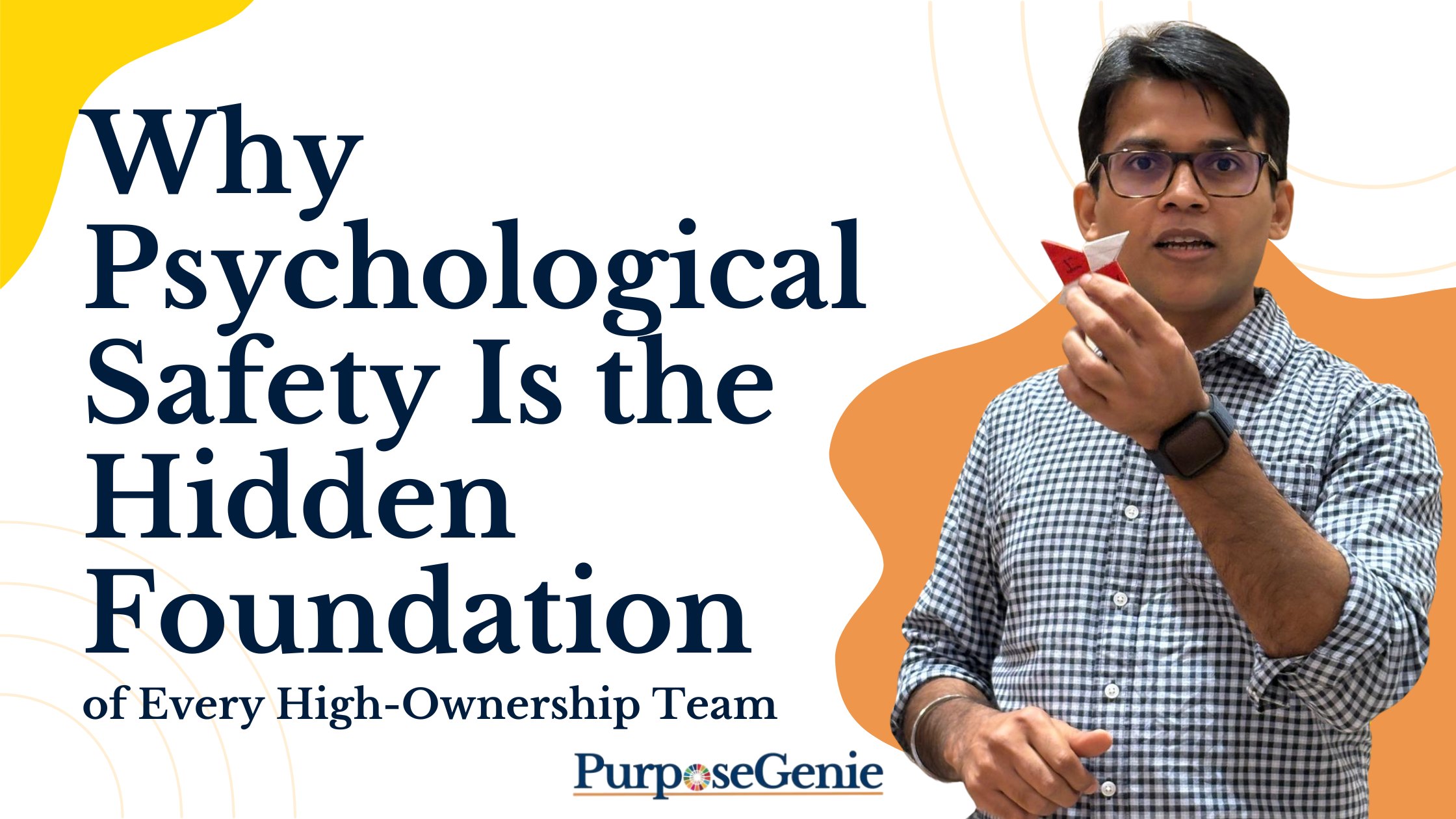
“You can’t have ownership without safety. And you can’t have safety without intention.”
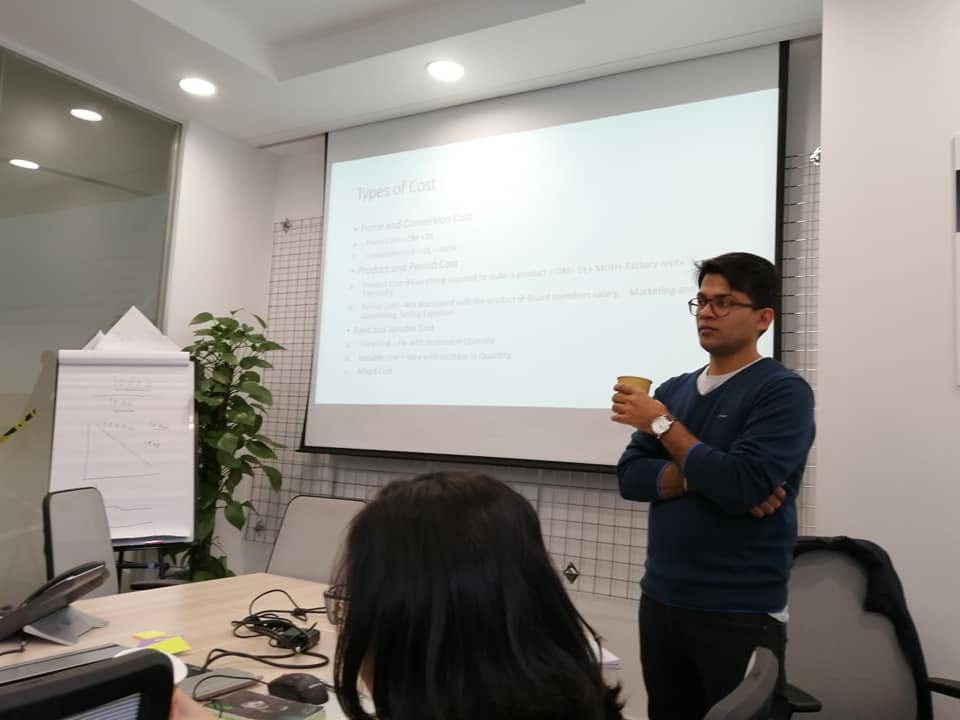
A few months ago, I was facilitating a leadership workshop for a manufacturing organization.
During one activity, I asked a simple question:
“When was the last time someone on your team disagreed with you in a meeting?”
The room became unusually quiet.
One senior leader smiled and replied,
“Honestly, Divesh, my team agrees with me most of the time.”
At first glance, that sounds like good leadership.
But after a few more conversations, another reality emerged.
People weren’t agreeing because they believed the ideas were right.
They were agreeing because they didn’t feel safe enough to disagree.
That one moment explained why innovation had slowed, why ownership was weak, and why the same operational issues kept resurfacing.
The problem wasn’t capability.
It wasn’t experience.
It wasn’t even motivation.
It was the absence of psychological safety.
And that’s something many organizations still underestimate.
Ownership Doesn’t Begin with Accountability. It Begins with Safety.

When organizations talk about ownership, they often think about accountability.
They introduce KPIs.
They define responsibilities.
They build performance dashboards.
They create review meetings.
Yet despite all these systems, many leaders still hear familiar statements:
“Nobody takes initiative.”
“People wait to be told what to do.”
“My managers execute but don’t think.”
The question isn’t whether people know their responsibilities.
The question is whether they feel safe enough to own them.
Because ownership is not simply a behavioural expectation.
It is a psychological decision.
People choose ownership only when they believe it is safe to contribute, question, experiment, and occasionally fail.
That is why psychological safety is the hidden foundation beneath every high-ownership culture.
What Is Psychological Safety?
Harvard professor Amy Edmondson, whose research transformed modern leadership thinking, describes psychological safety as a shared belief that a team is safe for interpersonal risk-taking.
In simple language, it means creating an environment where people can say:
- “I made a mistake.”
- “I have a different idea.”
- “I don’t understand.”
- “Can we try another approach?”
…without fear of embarrassment, punishment, or losing credibility.
This doesn’t mean lowering standards.
It means removing unnecessary fear.
As Edmondson writes in The Fearless Organization, organizations learn faster when people feel safe enough to speak honestly. That simple insight has become one of the strongest predictors of innovation and continuous improvement.
The Data Tells the Same Story

Psychological safety is no longer just a leadership trend.
It is backed by years of research.
Google’s famous Project Aristotle, which studied hundreds of teams, found that psychological safety was the single most important factor distinguishing high-performing teams from average ones.
Similarly, Gallup research consistently shows that employees who feel heard and valued are significantly more engaged and productive than those who don’t.
For HR leaders and L&D professionals, this is an important shift.
If engagement, innovation, and ownership are business priorities, psychological safety cannot remain a soft-skill conversation.
It must become a leadership capability.
Why Ownership Fails Without Psychological Safety
Imagine asking someone to take ownership while making them afraid of making mistakes.
Imagine expecting innovation while criticizing every failed experiment.
Imagine asking managers to think independently while rewarding only compliance.
It doesn’t work.
Fear creates compliance.
Safety creates commitment.
Compliance may produce short-term execution.
Commitment produces long-term ownership.
That’s why organizations that rely only on processes often struggle to build cultures where people willingly go beyond their job descriptions.
The Missing Link: My SPACE and SERVE Frameworks
One of the biggest misconceptions in leadership is believing ownership can be instructed.
It cannot.
Ownership is cultivated.
This is where My ECG Framework offers a practical roadmap for organizations.
Rather than viewing performance only through operational metrics, ECG focuses on creating the right leadership experience that inspires meaningful contribution and sustainable growth.
Within this framework, two elements work together to create ownership.
SPACE-P: Psychological Safety Creates the Environment
SPACE represents the leadership experience people have every day.
The “P” stands for Psychological Safety.
Leaders create psychological safety when they:
- Encourage questions instead of assuming silence means agreement.
- Treat mistakes as opportunities for learning rather than occasions for blame.
- Listen actively before giving solutions.
- Welcome different perspectives during problem-solving.
- Make it acceptable to say, “I don’t know.”
When people experience this consistently, trust grows.
And trust becomes the foundation of ownership.
SERVE-E: Empowerment Turns Trust into Ownership
Safety alone is not enough.
People also need the freedom to act.
Within the SERVE framework, the “E” represents Empowerment and Autonomy.
Empowerment is more than delegation.
It is giving people the confidence, capability, and authority to make meaningful decisions.
Leaders who empower their teams:
- Coach instead of controlling.
- Ask questions instead of giving all the answers.
- Develop capability instead of dependency.
- Trust people with responsibility while providing support.
When Psychological Safety and Empowerment work together, something remarkable happens.
People stop working because they have to.
They start contributing because they want to.
That is the beginning of true ownership.
An HR director once shared a challenge during a leadership intervention.
Every engagement survey highlighted the same issue:
“People hesitate to speak openly.”
Initially, the company invested in communication workshops.
Nothing changed.
Later, they discovered the real issue.
Managers interrupted employees during meetings.
Suggestions were dismissed quickly.
Mistakes were discussed publicly.
Employees learned that staying silent was safer than speaking honestly.
The organization shifted its focus.
Instead of teaching employees to communicate better, they taught leaders to listen better.
Meeting practices changed.
Managers learned coaching conversations.
Recognition became more frequent.
Feedback became constructive.
Within months, participation increased dramatically.
Ideas flowed more freely.
Cross-functional collaboration improved.
Ownership followed naturally.
The biggest transformation wasn’t in communication.
It was in the climate.
Psychological Safety Is a Leadership Choice
Many leaders assume psychological safety is about being “nice.”
It isn’t.
High-performing organizations combine high standards with high trust.
They challenge people while supporting them.
They encourage accountability without creating fear.
Leadership expert Simon Sinek captures this beautifully:
“Leadership is not about being in charge. Leadership is about taking care of those in your charge.”
When people know their leader genuinely has their back, they become willing to stretch beyond their comfort zones.
That is where growth happens.
From Ownership to Growth: The Next Step
Throughout July, many organizations focused on building ownership.
Ownership is essential.
But sustaining ownership requires something deeper.
It requires creating an environment where people feel psychologically safe enough to think, challenge, innovate, and lead.
This is why August’s focus on Psychological Safety is not a new conversation.
It is the natural continuation of the ownership journey.
Ownership answers the question:
“Will I take responsibility?”
Psychological safety answers the question:
“Is it safe for me to do so?”
Together, they transform workplace culture.
The Leadership Shift Every Organization Needs
Organizations often invest heavily in systems, technology, and performance management.
Those investments matter.
But culture is built through daily leadership behaviour.
Every conversation.
Every meeting.
Every coaching interaction.
Every response to failure.
Every opportunity to recognise someone’s contribution.
The future belongs to organizations where leaders intentionally create SPACE, genuinely SERVE their people, and help teams THRIVE.
Because people don’t give their best where they feel judged.
They give their best where they feel trusted.
And trusted people become owners.
Final Thoughts
High-ownership cultures are not created through policies alone.
They are created through leaders who intentionally build psychological safety and empower people to contribute.
For HR leaders and L&D professionals, this is one of the greatest opportunities of our time.
When you invest in psychological safety, you are not just improving employee experience.
You are strengthening innovation.
Improving collaboration.
Developing future leaders.
And building an organization where ownership becomes a natural behaviour—not a forced expectation.
Because every great culture begins with one simple belief:
People speak up before they step up.
And when they feel safe enough to do both, extraordinary things happen.
Frequently Asked Questions
1. What is psychological safety in the workplace?
Psychological safety is the belief that employees can share ideas, ask questions, admit mistakes, or challenge opinions without fear of embarrassment, punishment, or negative consequences.
2. How does psychological safety improve employee ownership?
When employees feel safe, they are more willing to take initiative, solve problems, innovate, and accept accountability. Fear creates compliance, while safety encourages ownership.
3. What is the difference between empowerment and psychological safety?
Psychological safety creates the confidence to speak up, while empowerment gives employees the authority and support to take action. Together, they build high-performing, ownership-driven teams.
4. How can HR leaders build psychological safety?
HR leaders can develop psychologically safe workplaces by training managers in coaching, encouraging open feedback, recognizing contributions, promoting inclusive communication, and treating mistakes as learning opportunities.
5. How do the SPACE and SERVE frameworks support leadership development?
Within Divesh Soni’s ECG Framework, SPACE helps leaders create the right employee experience through psychological safety, while SERVE enables contribution through empowerment, coaching, and meaningful development. Together, they create cultures where people willingly take ownership.